Collab Only connects EdTech platforms, study apps, student productivity tools, language learning companies, and student-facing brands with YouTube creators whose audiences are actively enrolled students. Creators join free. Companies match by sub-niche. Every conversation opens by mutual interest — no cold outreach, no competing against irrelevant creators in a brief pool.
Not every EdTech brand fits every educational creator sub-niche. This matrix maps the six major company categories to the six primary educational YouTube creator types — helping brands identify the creator profiles most likely to reach their specific student customer.
| Company Category | Best Creator Sub-Niche Match | Second-Best Match | Content Format That Converts | Creator–Brand Fit |
|---|---|---|---|---|
|
🎓 EdTech Learning Platforms
Online course platforms, tutoring services, supplemental learning tools (Coursera, Chegg, Quizlet, Khan Academy)
|
STEM tutor channels, exam prep creators | Study-with-me, student lifestyle vloggers | Dedicated integration tutorial, honest platform review, exam prep workflow video | Strongest fit |
|
📱 Study & Productivity Apps
Note-taking, task management, flashcard, and study organisation tools (Notion, Anki, GoodNotes, Obsidian)
|
Study-with-me creators, student lifestyle vloggers | STEM tutor channels, essay/writing creators | Study setup tour, desk setup, workflow video integrating the app organically | Strongest fit |
|
🌍 Language Learning Apps
Language learning platforms and subscription services (Duolingo, Babbel, Rosetta Stone, iTalki, Pimsleur)
|
Language learning creators, student lifestyle vloggers | Study-with-me creators | Language learning challenge video, progress update series, honest platform review | Strongest fit |
|
💳 Student Banking & Fintech
Student checking accounts, budgeting apps, student credit cards, scholarship tools (Capital One, Chime, Mint, YNAB)
|
Student lifestyle vloggers, study-with-me creators | Essay/writing creators, exam prep creators | Student budget walkthrough, college money guide, app setup tutorial | Good fit |
|
💻 Laptop & Hardware Brands
Student laptop launches, tablet brands, study accessories (Apple, Lenovo, Samsung, iPad peripherals)
|
Study-with-me creators, student lifestyle vloggers | STEM tutor channels | Study desk setup tour, "best laptop for college" review, back-to-school tech haul | Good fit — seasonal |
|
📚 Academic Services & Supplies
Academic writing tools, citation managers, stationery brands, plagiarism checkers (Grammarly, Zotero, EasyBib)
|
Essay/writing help creators, exam prep creators | Study-with-me creators | Essay writing walkthrough featuring the tool, exam prep video with citation management demo | Niche-specific fit |
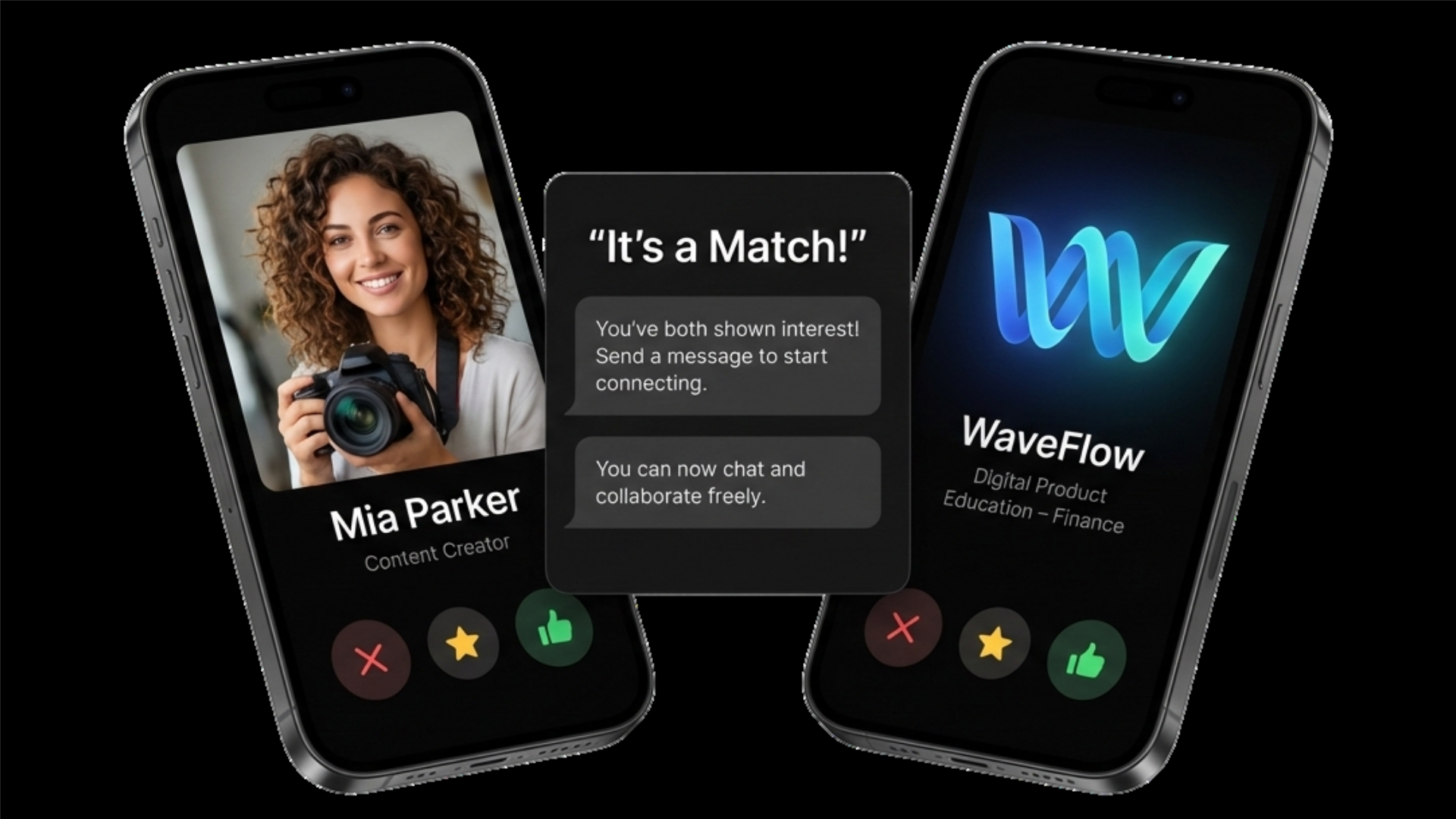
Collab Only uses mutual matching — EdTech brands and YouTube educational creators both signal interest before any conversation opens. No cold outreach. No brief pools where educational creators compete against thousands of irrelevant applicants. Every match is warm, already niche-qualified, and audience-verified.
Educational creators specify their student audience sub-niche — STEM tutor, study-with-me, exam prep, language learning, essay help, or student lifestyle — plus content formats, platform, and audience demographics. Companies see your positioning and student audience specificity before signalling interest.
EdTech platforms, study apps, and student-facing brands search by educational creator sub-niche. When both the company and the creator signal interest, the match confirms — no one-directional applications, no competing against thousands of general education or entertainment creators for a student-audience brief.
After a match, direct messaging opens immediately. Discuss brief requirements, content format, posting timeline, and usage rights directly with the company or creator. Zero platform commission is deducted from the deal — the rate agreed is the rate paid.
EdTech and student-facing brands that align their YouTube creator campaigns with the academic calendar consistently outperform brands that run campaigns on a generic content calendar. This map shows the optimal campaign windows, peak company categories, and recommended content formats for each seasonal moment in the student year.
| Academic Period | Peak Company Categories | Best Content Format | Recommended Lead Time | Campaign Activity |
|---|---|---|---|---|
|
📦 July–August: Back to School
New academic year preparation, US and UK school/college intake
|
Laptop & hardware brands, stationery & supplies, productivity apps, student banking, EdTech onboarding | Back-to-school haul, desk setup tour, "college essential apps" roundup, new student guide | 6–8 weeks (April–May briefing) | Peak season |
|
🎒 September: Term Start
First weeks of term — new students, new routines, new tool evaluation
|
Study apps, note-taking tools, student productivity platforms, EdTech course platforms | Study setup tour, workflow walkthrough, "tools I'm using this semester" video | 4–6 weeks (July briefing) | Peak season |
|
📝 October–November: Mid-Term Exams
First major assessment period — students actively seeking study support tools
|
Exam prep platforms, tutoring services, productivity apps, citation & writing tools, academic services | Exam study plan video, revision strategy walkthrough featuring the sponsored tool, "how I prepare for exams" format | 4–5 weeks (August–September briefing) | High activity |
|
✍️ November–December: Essay & Assignment Deadlines
End-of-term submission crunch — essay writing, citation, and productivity tool demand peaks
|
Academic writing tools (Grammarly), citation managers (Zotero, EasyBib), note-taking platforms, productivity apps | Essay writing walkthrough, assignment planning video, "how I write a 2,000-word essay" format | 4–5 weeks (September–October briefing) | High activity |
|
🎯 January: New Term & New Year
Reset energy, new routines, subscription re-evaluation — high intent for tool changes
|
Subscription learning platforms, productivity apps, language learning apps, EdTech courses | "New semester study setup" video, "tools I'm trying this year" format, honest platform review | 3–4 weeks (November–December briefing) | High activity |
|
📚 February–March: Spring Exam Prep
Second-semester exam preparation — sustained demand for study tools and academic services
|
Exam prep platforms, tutoring services, study apps, academic writing tools | Study plan video, exam prep strategy walkthrough, "how I revised for finals" format | 4–5 weeks (December–January briefing) | High activity |
|
🎓 April–May: Finals & Graduation
Final exams and graduation season — academic urgency and life transition content
|
Exam prep tools, student fintech (transitioning to post-student banking), laptop brands (graduation gift positioning), EdTech career platforms | Final revision guide, "graduating student toolkit" video, post-graduation app setup | 4–6 weeks (February–March briefing) | Medium activity |
|
☀️ June: Summer Break
Inter-term period — lower study intent but higher lifestyle and language learning interest
|
Language learning apps, online course platforms, summer productivity tools | Summer language learning challenge, "skills I'm learning this summer" video, self-paced course review | 3–4 weeks (April briefing) | Lower — niche focus only |
Campaign briefing principle: YouTube video production timelines are typically 2–3 weeks from brief to live post. Add platform review and revision cycles. For back-to-school campaigns, brief in April–May. For exam prep campaigns, brief 6–8 weeks before the exam period begins. Late briefs produce rushed content that performs below the creator's organic average.
The six YouTube video formats EdTech and student-facing companies use most frequently for creator campaigns — and why each format converts differently with student audiences in 2025–2026.
An entire video structured around the sponsored product — typically a step-by-step setup walkthrough, feature tour, or "how I use this tool in my student workflow" format. The highest-converting format for EdTech and study app brands because the student viewer is in an active evaluation mindset: they watch the full video to decide whether to download or subscribe. Long watch time signals strong purchase intent.
Highest conversionCreator evaluates the sponsored product in the context of their real student workflow — covering what works, what doesn't, and who it is and is not suited for. Student audiences are sensitive to dishonest reviews because they are making academic tool purchase decisions on limited budgets. Honest reviews that acknowledge limitations consistently outperform uniformly positive endorsements for EdTech brands.
High trust signalCreator shows their complete study environment — desk, laptop, stationery, apps — with the sponsored product featured as a natural element of the setup. Performs best for hardware brands, stationery companies, and productivity apps because the product is shown in authentic use context rather than isolated. High shareability among students comparing study setups.
Strong shareabilityCreator films a real-time study session — typically 1–4 hours — with the sponsored app, platform, or tool integrated as part of their study method. Study-with-me videos have unusually high watch time because viewers use them as background ambient content while studying. The sponsored product benefits from extended, low-friction brand exposure throughout the session.
Highest watch timeCreator produces an exam preparation or revision strategy video where the sponsored tool is positioned as a key component of their study method — a flashcard app in an active recall strategy video, a tutoring platform in an exam prep plan, or a citation tool in an essay writing guide. High-intent format because viewers are actively preparing for assessments and in an active tool-adoption mindset.
High purchase intentCreator commits to a 30-day or semester-long language learning challenge using the sponsored platform, documenting progress at regular intervals. Specific to language learning sponsors (Duolingo, Babbel, iTalki). Generates a content series rather than a single video, providing extended brand exposure across multiple episodes. Performs especially well when the creator's baseline language level makes the progress visible and credible.
Series format — extended exposureEdTech brands and student-facing companies that run YouTube creator campaigns alongside TikTok and Instagram campaigns consistently find YouTube delivers different — and often better — outcomes for academic product categories. Four structural reasons explain why.
A creator's video titled "best study apps for college 2026" can rank simultaneously in YouTube Search and Google Search. A sponsored integration within a search-ranking study video continues generating brand impressions — and referral sign-ups — for months or years after the campaign ends. TikTok and Instagram content decays within 48–72 hours. A YouTube placement in a search-ranking student video is an ongoing acquisition asset, not a time-limited impression.
YouTube videos average significantly longer watch times than TikTok or Instagram Reels for educational content. A 15-minute dedicated integration video gives a sponsored EdTech tool 2–4 minutes of genuine viewer attention. A 60-second TikTok integration gives less than 15 seconds. For complex products that require explanation — online course platforms, study methodology apps, citation tools — longer integration time is directly correlated with conversion quality.
Student search behaviour is heavily query-driven and recurring — "how to write a literature review," "best app for memorising vocab," "how to use Anki for exams" are searched every academic cycle by new student cohorts. YouTube educational content targeting these queries is found by new students every semester, not just during the campaign posting window. Academic content has a longer content lifecycle than entertainment or trend content.
Student-focused YouTube educational creators maintain more homogeneous student audiences than general content creators on short-form platforms. A TikTok creator with 200,000 followers may have a student-leaning audience but significant non-student dilution. A YouTube educational creator with 20,000 subscribers who produces exclusively exam prep and study content has a near-pure student audience. For products with a student-only customer profile, audience purity is more valuable than audience size.
How EdTech brands, study app companies, and student-facing businesses find YouTube educational creators — and the real cost of each approach.
Common questions from EdTech brands, student-facing companies, and YouTube educational creators about niche creator partnerships.
YouTube educational creators for students are content creators who produce YouTube videos specifically aimed at student audiences — covering study techniques, exam preparation, note-taking methods, STEM subject tutoring, academic writing, language learning, and student productivity. They are distinct from general educational YouTubers in that their audience is made up of actively enrolled students who trust them as a practical academic resource. Their content is used by students to make purchase decisions about academic tools and services — which makes their channel a high-intent channel for EdTech, study app, and student-facing brand campaigns.
Companies that actively look for YouTube educational creators for students include: EdTech platforms offering online learning or tutoring (Coursera, Chegg, Quizlet, Khan Academy); study and productivity apps (Notion, Anki, GoodNotes, Obsidian); language learning platforms (Duolingo, Babbel, iTalki); student banking and fintech apps; laptop and hardware brands targeting the student market; stationery and school supply brands with back-to-school campaigns; and academic writing and citation tools (Grammarly, Zotero). EdTech platforms are the highest-volume brand category in the educational YouTube creator niche — they run campaigns year-round because their academic calendar is continuous.
No. EdTech platforms, study apps, and student-facing brands do not require a minimum subscriber count to partner with YouTube educational creators. Companies in this category prioritise audience specificity over audience size — whether a creator's subscribers are genuinely students who actively use and evaluate academic tools. A YouTube study creator with 9,000 subscribers whose audience is predominantly enrolled students will attract more EdTech brand interest than a general lifestyle creator with 90,000 subscribers whose student content is incidental. Niche audience purity, not subscriber volume, is the primary vetting criterion for student-targeted campaigns.
The highest-performance periods for EdTech YouTube creator campaigns are: July–September (back-to-school and new term — the peak season for study app, hardware, and EdTech platform campaigns); October–November (mid-term exam preparation — peak for tutoring services, exam prep platforms, and productivity tools); November–December (end-of-term essay deadlines — peak for academic writing tools, citation managers, and productivity apps); and January (new-term reset — strong intent window for subscription learning platforms and productivity apps). Summer (June) is the lowest-intent period except for language learning and self-paced course brands. See the Academic Calendar Campaign Timing Map on this page for full detail.
EdTech and student-facing brands most commonly brief YouTube educational creators on: dedicated integration videos (full video built around the sponsored tool — setup walkthrough, feature tour, or workflow integration); honest tool reviews where the creator evaluates the product in their real student workflow; study setup and desk tours featuring the sponsored product; study-with-me sessions with branded tool integration; exam preparation and revision guide videos; and language learning challenge series. Dedicated integration videos and honest reviews consistently deliver the highest conversion for EdTech products because student viewers are in an active evaluation and purchase decision state when watching this content type.
From the Collab Only Blog
Two complete guides covering both sides of every EdTech YouTube creator partnership.
For Companies
How EdTech Brands Find YouTube Educational Creators Sourcing methods, creator vetting, brief structure, academic calendar timing, and deal formats for student-audience YouTube campaigns.For Creators
How to Get Brand Deals as a YouTube Educational Creator Sub-niche positioning, media kit, rates, pitching strategies, and how to protect your academic authority while building a sustainable brand deal portfolio.Whether you're a YouTube educational creator building your first brand deal portfolio or an EdTech company scaling student-audience creator campaigns — Collab Only is built for both sides of this match.
No subscriber minimum · No commissions · Mutual matching only