TikTok · Mental Health Awareness

TikTok Influencers for Mental Health Awareness

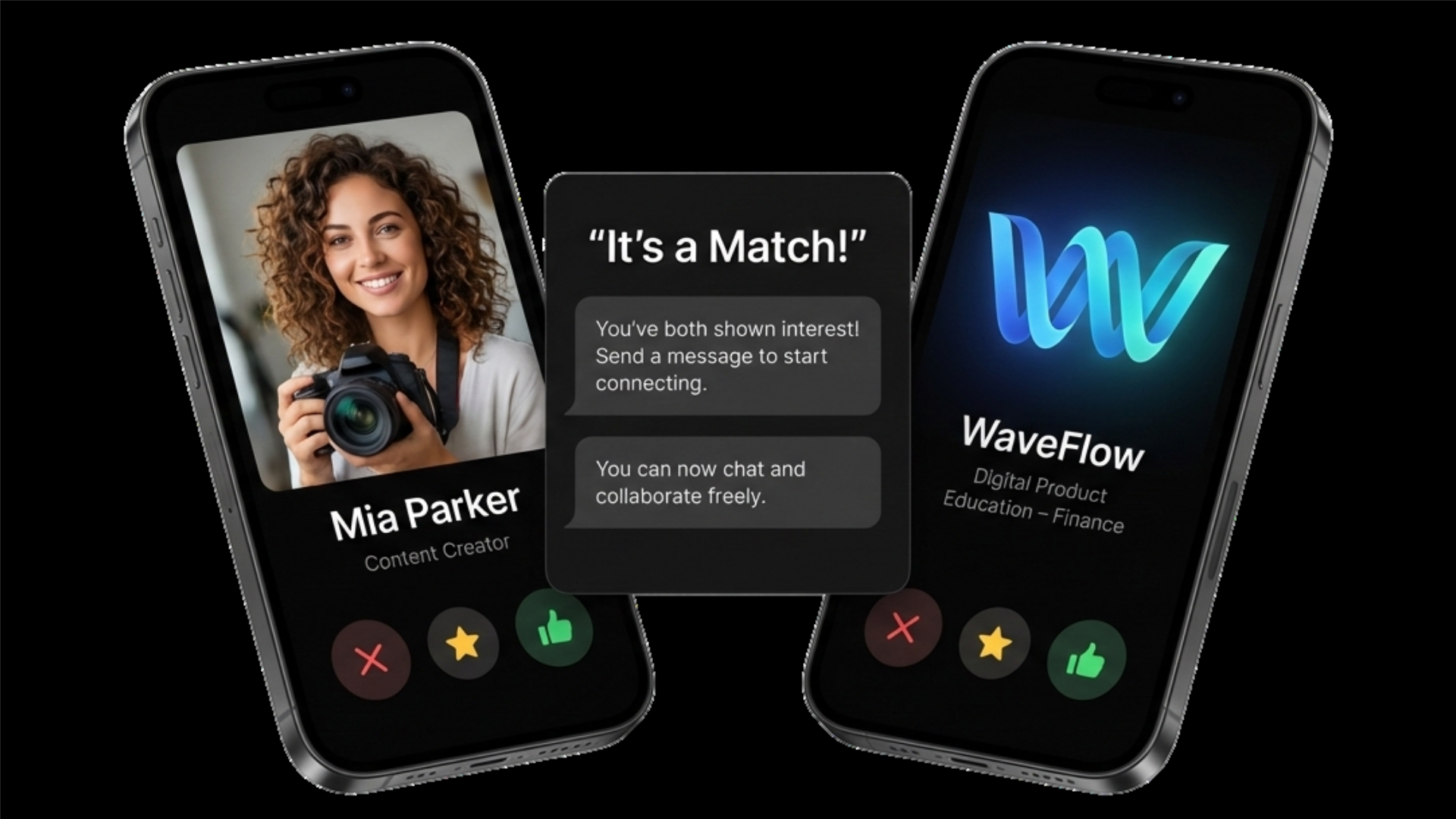
Mental health apps, nonprofits, healthcare systems, and employers are matching with TikTok mental health creators on Collab Only. Lived-experience advocates, licensed therapists, ADHD creators, anxiety voices, and burnout advocates — connect without agency fees, open brief queues, or cold outreach.

No following required to join
0% commission on deals
Mutual matching — no unsolicited pitches
Direct messaging — no middleman
Mental health TikTok influencer matching with organisations on Collab Only

Who Hires Mental Health TikTok Influencers

Mental health influencer campaigns are not exclusive to commercial brands. The buyer side of this niche is broader than any other creator category — spanning apps, nonprofits, healthcare systems, and employers.

📱

Mental Health Apps

Meditation apps, therapy platforms, journaling apps, and mood-tracking tools run always-on creator campaigns to drive app downloads and free trial signups. They typically partner with wellness lifestyle creators, anxiety creators, and burnout advocates whose audience demographic matches their user profile.

Calm-type Headspace-type Therapy platforms
🤝

Nonprofits and Mental Health Charities

NAMI, Mind, Samaritans, and equivalent national and regional mental health charities run awareness campaigns tied to Mental Health Awareness Month (May), World Mental Health Day (October 10), and Suicide Prevention Month (September). They seek creators with high community trust and authentic personal advocacy — not commercial polish.

Awareness month campaigns Stigma reduction Donation drives
🏥

Healthcare Systems and Hospitals

NHS trusts, hospital networks, and community health organisations run TikTok influencer campaigns for community outreach, service awareness (therapy access, crisis lines), and public health stigma reduction. These organisations require safe messaging guideline compliance and often brief creators with specific approved language.

Community outreach Service awareness Public health
🏢

Employers and HR Platforms

Companies running workplace wellbeing programmes and EAP (Employee Assistance Programme) providers partner with burnout, work-life balance, and professional wellness creators on TikTok to reach working adults aged 25–45. Campaign goals typically include EAP awareness, destigmatising workplace mental health conversations, and promoting support resources.

EAP awareness Workplace wellbeing Burnout content
🎓

Universities and Student Wellbeing Services

University wellbeing teams, student support services, and youth mental health charities run campaigns targeting Gen Z audiences on TikTok. They specifically seek student creators and young adult mental health advocates whose content resonates with the 18–24 demographic during high-stress academic periods.

Student mental health Exam period campaigns Youth outreach
💊

Supplement and Wellness Brands

Stress-support supplements, adaptogen brands, sleep aid companies, and mood-supporting nutrition brands partner with wellness creators, sleep creators, and stress management advocates. These partnerships require strict FTC disclosure compliance and must not make clinical health claims — creators must position products within wellness, not treatment.

Stress support Sleep wellness Adaptogen brands
⚑ Compliance & Ethics

Safe Messaging and Ethical Partnership Guidelines

Mental health influencer campaigns require a higher compliance standard than any other creator category. Organisations briefing creators and creators accepting briefs should understand these four areas before any campaign goes live.

🛡️ Safe Messaging for Crisis Content

Safe messaging guidelines — published by the American Foundation for Suicide Prevention (AFSP), the Samaritans, and SANE — specify that content involving suicide and self-harm must avoid graphic detail, specific method descriptions, and glorification or sensationalisation. TikTok's community guidelines independently restrict certain self-harm content. Creators covering these topics should always include crisis resource signposting — national helpline numbers or links to support services — within or alongside the content.

📋 TikTok Platform Content Rules

TikTok's Community Guidelines designate mental health content as a protected category subject to additional review. Content that depicts, promotes, or normalises self-harm or suicide is removed. Mental health creators running paid partnership content must ensure both their organic posting history and paid content are compliant — a brand can be associated with a creator's prior content in addition to the campaign deliverable itself.

⚖️ FTC Disclosure for Mental Health Partnerships

All paid partnerships — including app partnerships, supplement sponsorships, and gifted products — require clear FTC-compliant disclosure using language like "#ad," "#sponsored," or "paid partnership with [Brand]" visible within the first three lines of the caption or spoken within the first few seconds of the video. Mental health audiences are particularly sensitive to undisclosed commercial intent — transparent disclosure protects both creator trust and legal compliance.

🚫 What Creators Cannot Claim

Mental health TikTok creators — including licensed therapists — cannot make clinical diagnosis claims, guarantee treatment outcomes, or position products or content as medical advice. Lived-experience creators should use first-person framing ("this helped me") not prescriptive framing ("this will help you"). Therapy platform partners should be briefed that even licensed creator-partners must distinguish between educational content and clinical recommendations.

Lived-experience positioning is legally and ethically distinct from clinical advice. A creator sharing their personal journey with anxiety, depression, or ADHD is not providing clinical guidance — and should not present it as such. Organisations should brief creators on this distinction explicitly. Creators should ensure their profile bio and pinned content make this distinction clear to their audience.

Mental Health TikTok Sub-Niche Demand Matrix

Not all mental health sub-niches have equal brand demand or audience volume. This matrix shows which categories have the highest active campaign demand, peak campaign windows, and what organisation type is the primary buyer for each creator type.

Sub-Niche Primary Organisation Types Top TikTok Format Demand Level Peak Campaign Window
🧠 ADHD & Neurodivergence
#ADHD — 30B+ TikTok views; lived-experience community
Mental health apps, productivity tools, coaching platforms POV / "my ADHD explained", tools and systems walkthroughs Very high Year-round; algorithm-driven
😰 Anxiety & Stress Management
Grounding techniques, anxiety diary, coping toolkit content
Mental health apps, nonprofits, supplement brands Grounding demo, "what anxiety actually feels like" talking-head, toolkit walkthrough High Year-round; peak Jan, May, Oct
🛋️ Therapy & Professional Support
#TherapyTok — licensed therapist or counsellor creators
Therapy platforms, healthcare systems, mental health apps Educational explainer, therapy myth-busting, Q&A High Year-round
🔥 Burnout & Work-Life Balance
Workplace wellness, boundary-setting, professional recovery
Employers, EAP platforms, HR platforms, wellness apps Workplace POV, "why I set this boundary", Q1 burnout diary Growing fast Peak Jan–Mar, Sep–Oct
💙 Depression & Mood Support
Destigmatisation, honest personal accounts, lived experience
Nonprofits, healthcare systems, therapy platforms Honest talking-head, day-in-the-life, community response content High Peak May, Oct (awareness campaigns)
😴 Sleep & Rest
Sleep hygiene, insomnia, rest routines
Supplement brands, wellness apps, mattress and sleep brands Sleep routine Reel, insomnia diary, "what finally helped me sleep" content Growing Year-round; peak Oct–Jan
🧘 Mindfulness & Meditation
Guided breathing, journaling routines, presence practices
Meditation apps, wellness supplement brands, healthcare systems Guided breathing clip, "3-minute grounding", journaling routine High Year-round; peak Jan, May
🎓 Youth & Student Mental Health
Student life, exam anxiety, university transition
Universities, student unions, youth nonprofits, mental health charities Student POV, exam anxiety diary, "first year of uni" content Seasonal high-value Peak Aug–Sep, Jan, May

Mental Health TikTok Creator Types

Mental health creators are not a monolithic category. Organisations match with different creator profiles depending on campaign goals, legal requirements, and audience targeting.

💬

Lived-Experience Advocates

Creators who share personal mental health journeys — anxiety, depression, ADHD, OCD, recovery — from a first-person perspective. No clinical credentials required. Their value is authentic community trust: followers engage because they feel understood, not because they are being educated.

Best for: Nonprofits, awareness campaigns, app partnerships
🩺

Licensed Professional Creators

Therapists, counsellors, psychologists, and psychiatrists posting educational content on TikTok via #TherapyTok. They combine credentials with platform-native content formats. Their positioning is explicitly educational — not personal advocacy. Therapy platforms and healthcare brands specifically seek this creator type.

Best for: Therapy platforms, healthcare systems, mental health apps
🏢

Workplace Wellness Creators

Burnout, work-life balance, and professional wellbeing creators whose content addresses the intersection of career and mental health. Typically 25–40 age demographic, often sharing experiences in corporate or demanding professional environments. Resonant with EAP platforms and employer wellbeing campaigns.

Best for: Employers, EAP providers, HR platforms
🌙

Sleep and Rest Creators

Creators focused on insomnia, rest, and sleep health — an adjacent but distinct niche to anxiety and stress management. Calm, low-stimulation aesthetic. High affinity with supplement brands, sleep-tracking app campaigns, and wellness brands running always-on content programmes.

Best for: Supplement brands, sleep apps, wellness brands
🎓

Student and Youth Mental Health Creators

Gen Z creators sharing student life, exam stress, and university mental health experiences. Their audience is the 16–24 demographic that university wellbeing services and youth charities need to reach. Relatability and peer authenticity are more valued than follower size in this creator type.

Best for: Universities, student unions, youth nonprofits
🧩

Neurodivergence and ADHD Creators

Creators sharing ADHD, autism, dyslexia, and related neurodivergence experiences. TikTok's algorithm makes this one of the strongest self-identifying communities on the platform — content reaches people who recognise themselves in it, not just followers of the creator. High engagement-to-view ratios make this creator type efficient for campaigns with specific audience targeting.

Best for: Mental health apps, productivity tools, coaching platforms

Why TikTok for Mental Health Awareness

TikTok's algorithm and content format create a structural match with mental health awareness content that no other platform replicates.

Algorithm-Driven Audience Matching

TikTok's FYP (For You Page) algorithm distributes mental health content to users who are actively experiencing the same struggles — not based on who they follow, but on their engagement patterns. A creator's video about anxiety can reach 50,000 people experiencing anxiety who never searched for that content. No other platform achieves this at the same organic rate.

Scale of the Mental Health Community

#MentalHealth has over 100 billion views on TikTok (2025 data). #Anxiety, #ADHD, and #TherapyTok are each multi-billion-view verticals. The mental health audience on TikTok is not a niche — it is one of the platform's largest content categories by total watch time and community engagement volume.

Highest Comment-to-View Ratio of Any Category

Mental health content on TikTok generates comment engagement rates that significantly exceed entertainment and lifestyle categories. Audiences respond because they feel seen — comments become peer support threads. This comment density is what makes mental health creator communities uniquely valuable for organisations wanting authentic reach, not passive impressions.

Format Aligned to Authenticity

TikTok's direct-to-camera, short-form, casual format is structurally matched to mental health content. Vulnerability is harder to produce in polished, long-form YouTube formats. TikTok's low production barrier means creators can post during difficult periods without a production setup — which is exactly when authentic mental health content is created.

Audience Age Demographic Alignment

The 18–34 demographic that dominates TikTok is the same demographic with the highest reported rates of anxiety, depression, and burnout (APA 2023–2025 data). Campaigns targeting this demographic on TikTok reach the highest-need audience natively — not via age-targeted advertising, but through content they seek out themselves.

Search Behaviour is Growing Fast

TikTok search for mental health terms — "anxiety tips", "ADHD explained", "therapy is for me" — has grown significantly since 2023. TikTok is now a primary search destination for mental health information among under-35s, ahead of Google for many personal wellbeing queries. Creator content is the search result in this format.

How Mental Health Creator Matching Works on Collab Only

Collab Only uses mutual matching — organisations and mental health creators both signal interest before any conversation opens. Campaigns start from shared intent, not cold outreach or unsolicited pitches.

01

Build Your Creator Profile

Mental health creators list their content niche (anxiety, burnout, therapy, ADHD, mindfulness, sleep, student wellbeing), their platform, their audience demographic, and their posting approach (lived-experience or professional credentials). Organisations review your profile before requesting a connection — no blind applications or unsolicited pitches.

02

Match with the Right Organisation

Organisations — apps, nonprofits, healthcare brands, employers — filter for creators by mental health sub-niche, audience age, and TikTok presence. Both sides signal interest before messaging opens. Creators are not competing in open brief queues and organisations do not receive unsolicited pitches.

03

Negotiate Directly — Zero Commission

When a match confirms, direct messaging opens immediately. Discuss the brief, safe messaging expectations, disclosure requirements, rate, usage rights, and campaign timeline directly. Collab Only takes zero commission from either the organisation or the creator on every deal.

Collab Only vs. Influencer Agencies for Mental Health Campaigns

Most agency and marketplace models were not built for the specific dynamics of mental health creator partnerships — where trust, ethical alignment, and direct communication matter more than reach volume.

Agency / Traditional Platform
Commission taken from deal value — typically 15–30%
Organisations submit briefs; creators apply competitively
Agency sits between creator and organisation — no direct conversation
Minimum follower thresholds exclude nano and micro mental health creators
Ethical alignment and safe messaging compliance not built into matching
Campaign timelines delayed by intermediary approval chains
Collab Only
Zero commission on all deals — both sides keep 100%
Mutual matching — both sides signal interest first
Direct messaging between organisation and creator — no middleman
No follower minimum — community trust matters more than reach
Safe messaging expectations discussed directly in the first conversation
Campaign brief discussed and agreed directly — no approval chains

Looking for Something More Specific?

All TikTok Influencer Niches

Browsing TikTok creator categories across all verticals? The Find TikTok Influencers hub covers every niche available on Collab Only.

Nano and Micro Mental Health Creators

Most high-trust mental health creators on TikTok are nano or micro accounts — small following, deeply engaged communities. See how micro-influencer partnerships work on Collab Only.

Niche Creator Specialists

Mental health is one of the highest-trust niche categories in creator marketing. Hire niche influencers covers the framework for matching with specialist creators across verticals.

TikTok Fitness and Wellness Creators

Perimenopause wellness and hormonal health brands often run concurrent mental health and fitness campaigns. See TikTok fitness influencers for women over 30 for adjacent creator matching.

Short-Form Content Across Platforms

Mental health campaigns on Reels, Shorts, or across multiple platforms? Hire short-form content creators covers multi-platform matching for awareness campaigns.

Nano Influencer Marketing for Wellbeing Campaigns

Wellbeing and nonprofit campaigns often have limited budgets that suit nano creator partnerships. See the nano influencer marketing guide for reach and budget planning.

What Creators and Organisations Say

Matched via Collab Only — zero commission, no agency intermediary.

★★★★★

"I post about anxiety from my own experience — I didn't expect brands would want to work with someone at my following size. Collab Only matched me with a meditation app that understood my community and didn't push me to post content that felt off-brand for my audience."

Lived-experience anxiety creator · 4,200 TikTok followers
★★★★★

"We needed TikTok creators for a Mental Health Awareness Month campaign — specifically people with authentic community trust, not high follower counts. The matching process on Collab Only filtered by niche and we were talking directly with creators within a day."

Mental health nonprofit · Awareness campaign · May
★★★★★

"As a therapist on TikTok, I'm selective about partnerships. Collab Only's mutual matching meant I wasn't receiving unsolicited pitches from brands I hadn't agreed to talk to. The first message was already a conversation, not a sales pitch I hadn't asked for."

Licensed therapist · #TherapyTok creator · 11,500 TikTok followers

Frequently Asked Questions

Common questions from organisations and mental health TikTok creators.

What types of organisations hire TikTok influencers for mental health awareness campaigns?
Mental health apps (meditation, therapy, journaling platforms), nonprofits and charities, healthcare systems, employers running workplace wellbeing campaigns, university student wellbeing services, supplement and wellness brands, and therapy or coaching platforms all hire TikTok influencers for mental health awareness. Organisations do not need to be commercial brands — nonprofits and NHS-adjacent healthcare campaigns are active buyers of mental health creator partnerships on TikTok.
Do organisations require a clinical background or credentials from mental health TikTok creators?
No. Most organisations match with two distinct creator profiles: lived-experience creators (who share personal mental health journeys without clinical positioning) and licensed professional creators (therapists, counsellors, or psychologists who post educational content). Lived-experience creators are the majority of the mental health creator ecosystem on TikTok and do not need clinical credentials — they need authentic community trust and consistent safe messaging practices.
What TikTok content formats work best for mental health awareness campaigns?
The highest-performing formats are direct-to-camera talking-head videos (personal disclosure, sharing experience), educational explainers (therapy myth-busting, condition explanation), grounding and coping technique demonstrations, and day-in-the-life content during difficult periods. TikTok's algorithm surfaces personal, emotionally resonant mental health content to users experiencing the same struggles — not based on keyword search alone.
What are safe messaging guidelines and how do they apply to mental health TikTok campaigns?
Safe messaging guidelines — published by the American Foundation for Suicide Prevention (AFSP), Samaritans, and SANE — specify that content involving suicide and self-harm must avoid graphic detail, specific method descriptions, and sensationalised framing. TikTok's community guidelines independently restrict certain self-harm content. Organisations running mental health campaigns must brief creators with these guidelines and include crisis resource signposting in high-risk topic content.
How is a mental health TikTok influencer different from a wellness or lifestyle creator?
A mental health TikTok creator specifically creates content about psychological wellbeing, mental illness, therapy, emotional regulation, or psychiatric conditions — either from lived experience or professional credentials. A wellness or lifestyle creator covers a broader category including physical health, nutrition, and general positive living. Mental health creators have distinct audience trust characteristics: followers engage at higher rates, share content with people going through similar experiences, and maintain high loyalty to creators who feel genuinely safe and non-commercial.
Which mental health sub-niches have the highest TikTok audience volume and brand demand?
As of 2025–2026, the sub-niches with the highest combined audience volume and brand demand are ADHD and neurodivergence awareness (#ADHD has over 30 billion TikTok views), anxiety and stress management, therapy and professional support (#TherapyTok), and burnout and work-life balance. Mental health apps and employer wellness platforms are the most active brand categories for anxiety and burnout creators respectively. Nonprofits concentrate campaigns in stigma reduction, depression awareness, and suicide prevention content during Mental Health Awareness Month (May) and World Mental Health Day (October 10).

Match with the Right Mental Health Creator or Organisation

Collab Only connects mental health TikTok creators with apps, nonprofits, healthcare brands, and employers running awareness campaigns — through mutual matching, direct conversation, and zero commission on every deal.

No following required · No commission · No cold pitches · Direct deals