Collab Only matches brands with TikTok creators living the US college student experience — food delivery, student fintech, fast fashion, tech, energy drinks, entertainment, dorm essentials, and campus lifestyle. Creators build a free profile. Brands match by sub-niche. No cold pitching. No agency markup.
College students are a geographically and socially clustered sub-segment of Gen Z. Campaigns built for general Gen Z miss the four structural advantages that make college TikTok creators uniquely effective.
When a creator at Penn State posts a food delivery review, TikTok's algorithm surfaces that content to other Penn State students through shared location data, contact graph proximity, and behavioral similarity signals. This campus network effect means college creator content concentrates within the target campus community before distributing broadly — a capability no off-campus creator can replicate.
Brand implication: Geo-targeted campaigns using college creators reach the right campus zip codes at a fraction of the CPM of broad demographic targeting.Move-in (August), back-to-school (September), midterm survival (October and March), spring break (February), and graduation (April–May) are five purchase cycles driven entirely by the academic calendar. Each window has different dominant brand categories. Dorm essentials brands peak in August. Energy drinks and food delivery spike in October. Fashion and travel dominate February. Brands that brief creators aligned to these cycles consistently outperform evergreen campaigns.
Brand implication: Semester-aligned content calendars outperform evergreen campaigns for every college-targeting brand category.The 18–24 demographic represents TikTok's largest US user segment by age in 2026. US college students are the most socially and geographically concentrated subset of this group — living together, attending the same events, referencing the same campus experiences. Peer-to-peer recommendation from a fellow student converts at higher rates than algorithm-distributed general content from a creator the audience has no social proximity to.
Brand implication: College TikTok creator content reaches the target demographic through peer validation — a trust signal that general Gen Z targeting cannot replicate.An 18-year-old entering college is making first independent decisions about banking, food delivery, personal care, streaming, and productivity tools — often within the same semester. Brands that reach students in this window establish preference patterns that compound over years. A student who starts using a budgeting app at 19 and keeps it through their career is not a conversion — they are a decade-long retention case study.
Brand implication: Student acquisition cost is low; lifetime value is high. College creator campaigns are customer acquisition, not just brand awareness.These are the eight TikTok content formats brands most frequently request from US college student creators in 2026, ranked by brief frequency across food delivery, fintech, fashion, tech, and lifestyle brand categories.
Creator documents a real college day — classes, campus life, meals, study sessions — with natural product integration. Highest save rate in the college demographic. Converts for food delivery, tech, and energy drink brands because the product appears in genuine context, not a staged review.
Creator films a study session — ambient footage of notes, laptop, campus library or dorm desk — with product appearing naturally in the background or as a study-break moment. Energy drinks, productivity apps, and student software brands are the primary buyers of this format. Long watch time boosts TikTok algorithm distribution.
Creator walks through their dorm or off-campus apartment setup — organization, decor, small space solutions. Peak brief volume in August and September. Dorm essentials brands, tech accessory brands, and personal care brands all use this format. One of the few TikTok formats where a physical product can be featured without it feeling like a review.
Creator reviews a food delivery order, campus restaurant, or meal kit on camera — showing the ordering process, delivery, and honest reaction. The most direct format for food delivery brands and campus dining sponsors. Comment sections fill with other students at the same campus sharing their own order experiences — peer amplification built into the format.
Creator transparently documents their weekly spending as a college student — groceries, food delivery, subscriptions, clothes — with a budgeting app or student financial product featured as part of how they track it. Student fintech brands, BNPL apps, and budgeting tools use this format as the primary brief format for college creators. Authenticity of real spending data is the hook.
Creator films a Get Ready With Me from their dorm or off-campus living space — distinctly college-specific setting, relatable morning context, personal care product integration. Campus beauty and personal care brands use this format to reach students making first independent purchase decisions for skincare, haircare, and grooming. Dorm setting is an authenticity signal that general beauty GRWM cannot replicate.
Creator shows purchases made for the new semester — tech, fashion, dorm supplies, books, accessories. Peak brief volume in July and August. Tech brands (laptops, accessories), fast fashion, and dorm essentials brands all use this format in their back-to-school campaigns. Haul format drives purchase intent in the audience at the highest-spend moment of the student calendar.
Creator films game day tailgate, campus concert, or university event content with product integrated into the social setting — beverage in hand, branded apparel worn, streaming service shown on a pre-game watch party. Beverage brands, streaming services, and apparel brands use this format for seasonal campaigns aligned to college sports calendars. High-energy, high-share format.
These are the eight brand categories with the highest active demand for US college student TikTok creators in 2026, with peak campaign season by academic calendar.
| Brand Category | Why College TikTok | Creator Profile Needed | Peak Season |
|---|---|---|---|
| 🍕 Food Delivery DoorDash, Uber Eats, campus-specific delivery | Students order 4–6x per week; peer recommendation from a fellow student on the same campus drives conversion more than any ad format | Actively orders food delivery on camera; shows real campus setting; campus-location signals in content | Year-round · Peak Oct & Mar |
| 💳 Student Fintech Budgeting apps, student bank accounts, BNPL | 18-year-olds making first independent financial decisions — highest lifetime value acquisition window for fintech products; peer influence drives app downloads among this cohort | Comfortable discussing money on camera; "what I spend" transparency; FTC-compliant framing for financial products | Aug–Oct · Jan–Feb |
| 👗 Fast Fashion & Thrift Shein alternatives, thrift/resale apps, indie labels | College students are at peak fashion purchasing impulsivity — trend-driven, price-sensitive, high social visibility of clothing choices; campus social dynamics make fashion a peer-influenced category | Campus OOTD content; thrift hauls; outfit transitions; fashion-forward sub-niche identity | Aug–Sep · Feb |
| 💻 Tech & Student Software Laptops, productivity apps, student subscriptions | Back-to-school purchase cycle drives $500–$2,000 tech decisions in August — peer recommendation from a student who bought the same laptop or app directly influences purchase; campus use case is the most credible demo context | Dorm desk setup content; productivity walkthroughs; honest tech reviews from a student use-case perspective | Jul–Sep · Jan |
| ⚡ Energy Drinks & Supplements Celsius, Ghost, emerging DTC energy brands | College student lifestyle — late nights, early mornings, high study load, gym culture — is the natural habitat for energy drink and supplement marketing; on-campus consumption is peer-visible and socially normalized | Study-with-me integration; gym visit content; honest product consumption on camera; campus social settings | Sep–Nov · Feb–Apr |
| 🎮 Entertainment & Streaming Streaming services, gaming platforms, live events | College students are cord-cutters making first independent streaming subscription decisions; gaming is a primary social activity in dorm culture; peer recommendation drives subscription and game purchases in this demographic | Gaming lifestyle content; "what I'm watching" series; reaction and recommendation formats; dorm social setting | Year-round · Peak Oct & Jan |
| 🧴 Beauty & Personal Care Skincare, haircare, grooming — dorm-scale | College students are making first independent personal care purchase decisions without parental influence — highest brand loyalty formation period for beauty and personal care; dorm skincare and "minimal kit" content resonates specifically with this demographic | GRWM from dorm or apartment; "skincare for college students on a budget" framing; authentic product routine integration | Aug–Sep · Jan–Feb |
| 🛏️ Dorm Essentials & Campus Lifestyle Organization, small appliances, dorm decor, bedding | Dorm room setup content has a narrow but extremely high-intent audience in August–September; a creator who films a genuine dorm move-in and setup reaches an audience that is actively buying everything they can see in the video | Dorm setup and tour content; small space organization; move-in day content; August-September posting cadence | Jul–Sep (peak) |
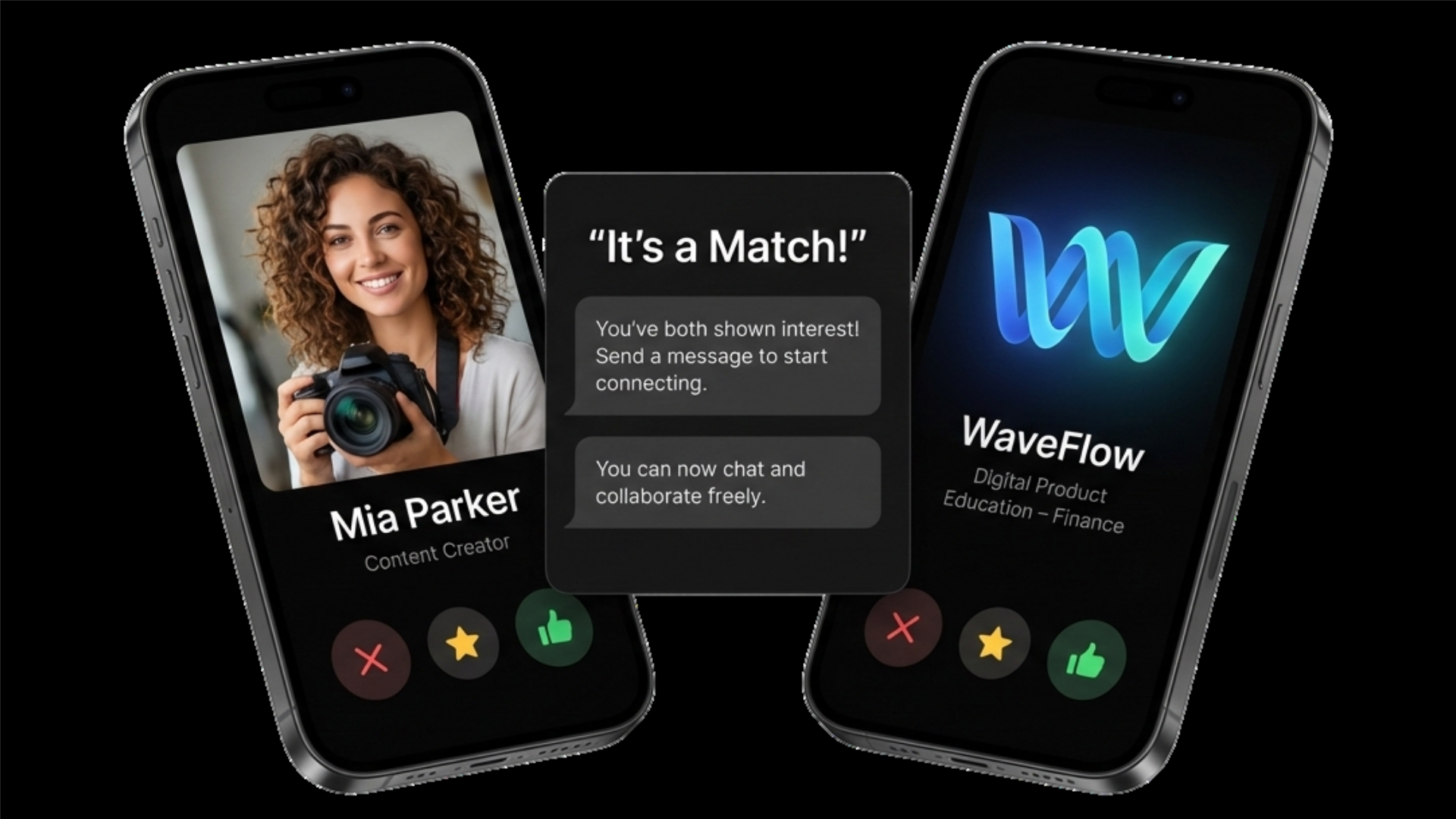
Collab Only uses mutual matching — college TikTok creators and brands both signal interest before any conversation opens. No cold pitches. No competing in a brief queue of hundreds of applicants.
TikTok creators add their campus lifestyle sub-niche (food delivery, fintech, fashion, tech, energy drinks, gaming, dorm lifestyle, campus beauty), content formats, posting platforms, and a portfolio sample. Brands searching for college student creators see exactly what you produce and where you film it — campus setting signals are the most valuable thing on your profile. No follower count minimum to join.
Brands — food delivery companies, student fintech apps, fast fashion labels, energy drink brands — search Collab Only by sub-niche. When a brand signals interest in your profile, you decide whether to match. Messaging only opens when both sides have agreed. No unsolicited DMs from either direction. No competing against 300 other applicants for the same brief.
Once matched, direct messaging opens instantly. Discuss the brief, rate, deliverables, usage rights (organic post, TikTok Spark Ads), exclusivity period, and payment timeline directly with the brand — no platform commission deducted. The deal value you negotiate is the deal value you receive. Collab Only charges zero commission from creators and brands on deals made through the platform.
How brands source college student TikTok creators — and what each method costs in time, accuracy, and deal quality.
This page covers TikTok creators producing US college student campus lifestyle content. If you need something adjacent:
"I'm a junior at UNC and started creating dorm and campus lifestyle content last year. I'd never done a paid deal before. Within a month on Collab Only a dorm essentials brand matched with me — I filmed my actual dorm setup and they got exactly what they needed. No agency, no application."
"We run a student budgeting app and our whole marketing case is peer-to-peer trust. Cold DM outreach to college creators was going nowhere. Collab Only's sub-niche search found us three creators who were literally already making 'what I spend as a college student' content. The brief basically wrote itself."
"I cover campus food reviews and honest student spending content. I have around 8,000 followers — mostly people at my university and nearby schools. A food delivery brand matched with me specifically for a geo-targeted campus campaign. They said my comment section was the pitch — students at my campus talking about delivery."
Brands actively hiring TikTok creators for US college students in 2026 include food delivery services, student fintech and budgeting apps, fast fashion and thrift/resale brands, student software and tech brands, energy drink and supplement brands, streaming and gaming companies, campus lifestyle and dorm essentials brands, and personal care brands targeting first-time independent purchasers. Food delivery brands and student fintech companies are the two fastest-growing brand categories in this niche — both are targeting the 18–22 year old demographic at the highest-value acquisition window in those customers' lives. Dorm essentials brands and tech brands concentrate their college creator campaigns in July and August, while energy drink, food delivery, and fintech brands run year-round programs with spikes during midterm and finals periods.
No. Brands targeting US college students do not require a minimum follower count from TikTok creators in this niche. What brands evaluate is campus authenticity — does the creator's content visibly reflect current college student life, does their comment section include other students engaging with campus-specific details, and is their sub-niche clearly defined. A creator with 2,000 followers at a specific university whose content shows authentic dorm, campus, and student lifestyle context is more valuable to a food delivery brand running a geo-targeted campus campaign than a general Gen Z creator with 200,000 followers who has not been a student in years. The core value proposition is peer credibility within a campus community — not broad demographic reach.
Brands briefing TikTok creators for college students most frequently request day-in-the-life Reels with natural product integration, study-with-me sessions with product placement, campus food reviews, dorm setup and small space tours, "what I spend in a week as a college student" financial content, GRWM from a dorm or apartment setting, back-to-school haul content, and game day or campus event integration. Day-in-the-life and study-with-me formats consistently generate the highest save rates in the college demographic — TikTok's strongest algorithm signal for ongoing content distribution. Back-to-school haul content has the highest brief volume concentration, with brands typically running campaigns in July and August specifically to align with the start-of-semester purchase window.
Brands prefer TikTok over Instagram for reaching US college students because the 18–22 age group is TikTok's highest-density US user segment in 2026, TikTok's algorithm surfaces content within peer networks and shared campus communities before distributing it broadly (the campus network effect), and TikTok Search is used as a primary product and recommendation research tool by college students. Instagram Reels remains the preferred secondary platform for fashion and beauty sub-niches within the college demographic, but TikTok delivers higher organic reach, stronger peer-credibility distribution, and better campus geo-targeting performance for the full college lifestyle brand category. Brands running Spark Ads on TikTok using college creator content can also specifically target 18–22 users in defined geographic areas corresponding to campus locations.
Not necessarily, but campus authenticity is what brands in this niche are paying for. A creator who is actively enrolled at a US college or university and produces content visibly rooted in that experience — campus locations, dorm or apartment settings, student lifestyle moments, semester-specific content timing — is the most credible match for brands running college student campaigns. Recent graduates within 1–2 years of completing a degree who maintain genuine connection to student community content can also match effectively with brands in this niche. A creator who has not been in college for 5+ years and whose content does not reflect student life authentically will not produce the peer-credible content that makes college TikTok creator campaigns work — and brands specifically evaluating campus authenticity signals in creator profiles will not match with them.
Whether you're a college TikTok creator landing your first brand deal or a brand scaling campus influencer content without agency overhead — Collab Only is built for both sides of this niche.
Free to join · Zero commission · Mutual matching