Collab Only matches acne skincare brands — spot treatments, OTC acne products, hormonal wellness, post-acne hyperpigmentation serums, and acne-safe makeup — with Instagram beauty influencers who specialize in acne prone skin. Match by skin concern sub-niche. Both sides confirm before any conversation begins.
Acne prone skin is not one creator category. Each sub-niche has a distinct audience signal, a different set of brand categories actively hiring, and Instagram content formats that over-perform for that specific skin concern.
Brand demand signals reflect 2025–2026 hiring activity across acne skincare categories on Collab Only.
| Sub-Niche | Audience Signal | Brand Categories Hiring | Best Instagram Format | Demand |
|---|---|---|---|---|
|
🔴 Cystic / Inflammatory Acne
Nodular, deep under-skin breakouts
|
Comments: "I've had cystic acne for 8 years…" — high emotional self-ID | Prescription-adjacent skincare, benzoyl peroxide, salicylic acid, spot treatment brands | Routine documentation series, honest ingredient reviews | High volume |
|
🌙 Hormonal Acne (Women 25–40)
Cycle-linked breakouts, chin/jaw pattern
|
Self-ID: "hormonal breakouts," "acne around my period," "cycle acne" | Hormonal wellness supplements, zinc/DIM, women's health apps, functional nutrition | Educational Reels, supplement integration, cycle-tracking content | Fastest growing |
|
🟤 Post-Acne Hyperpigmentation
Dark spots, scarring, texture after acne
|
High save rates on before/after content; search-driven ("how to fade acne marks") | Vitamin C, niacinamide, retinol, tranexamic acid, SPF brands | Before/during/after Reel series, ingredient explainers | High volume |
|
🟡 Teen / Adolescent Acne
Breakout-focused, accessible audience
|
Age-identified engagement, peer-sharing patterns, "me too" comment culture | Mass market skincare (CeraVe, Cetaphil), OTC acne wash, gentle cleanser brands | GRWM, honest product reviews, before/after documentation | Steady |
|
🟢 Sensitive Skin + Acne Overlap
Reactive skin that breaks out; barrier-damaged
|
Ingredient questions, patch test requests, fragrance-free alignment | Fragrance-free, minimal actives, barrier repair, gentle cleanser brands | Ingredient explainers, patch test documentation, routine rebuilds | Niche premium |
|
💫 Acne-Safe Makeup & GRWM
Non-comedogenic coverage, no-break-out make-up
|
Foundation questions, "does this break you out?" comments, coverage tips saves | Clean beauty makeup, non-comedogenic foundation, concealer, setting spray brands | Full-face GRWM, shade match, coverage build Reels | High volume |
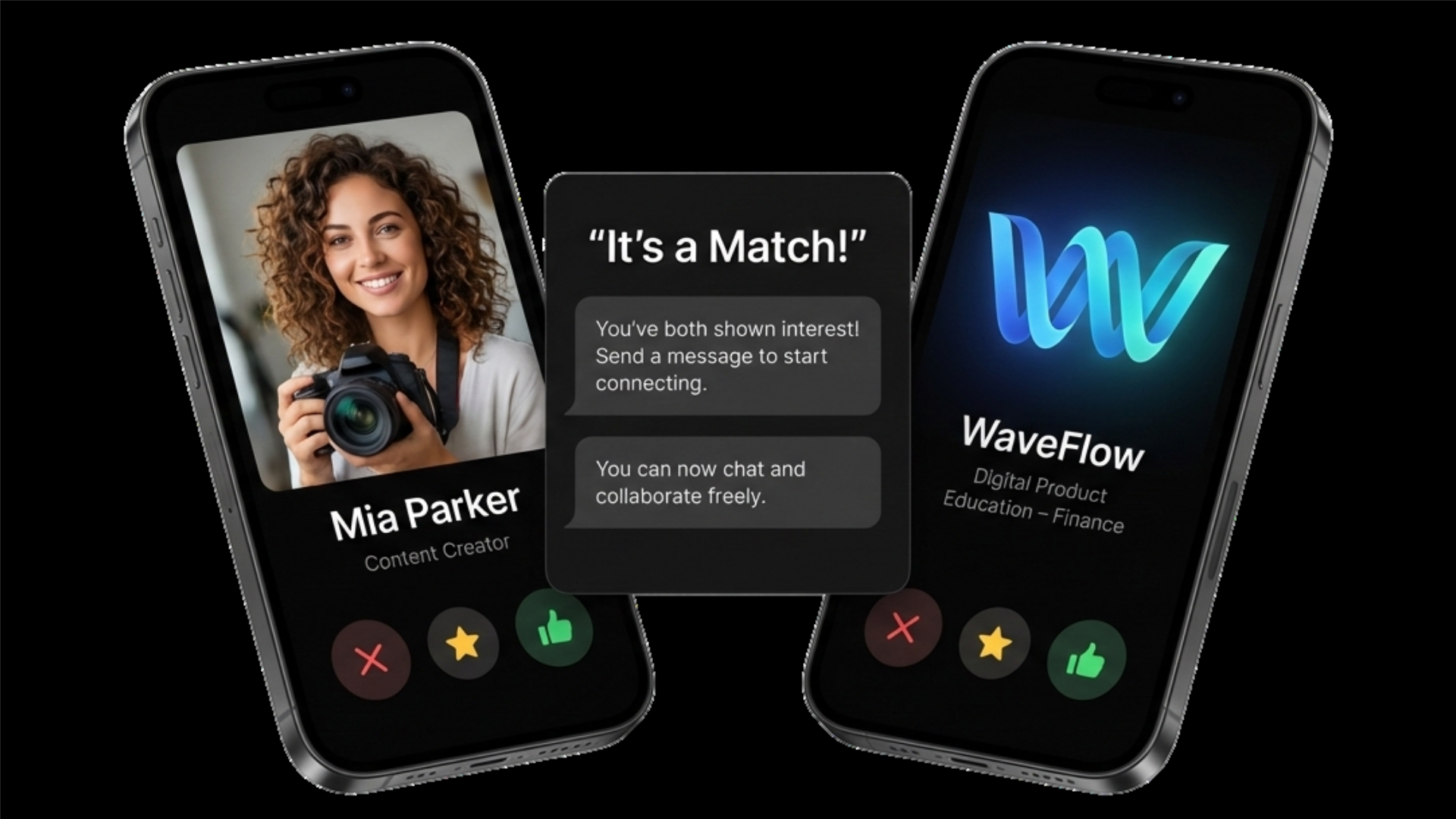
Collab Only uses mutual matching — acne skincare brands and Instagram beauty creators both confirm interest before any conversation opens. No cold pitches. No unsolicited DMs.
Instagram beauty creators with acne prone skin content list their specific sub-niche (cystic, hormonal, post-acne, sensitive, acne-safe makeup), content formats (Reels, carousels, stories), and a portfolio sample. Acne skincare brands see exactly what you produce and which skin concern you serve before signaling interest.
Acne skincare brands searching on Collab Only filter by sub-niche — not by reach. A hormonal wellness supplement brand finds hormonal acne creators. A post-acne hyperpigmentation serum brand finds creators whose content documents pigmentation recovery. When both sides signal interest, the match confirms simultaneously.
Direct messaging opens instantly after a match. Discuss the content brief, usage rights (organic post, brand channel, Spark Ads), platforms, and rate directly with the brand. No platform commission deducted from the deal. No intermediary in the middle of your negotiation.
Acne skincare is one of the few beauty sub-niches where Instagram outperforms TikTok for creator-brand alignment. Six structural reasons explain why brands specifically targeting acne-prone audiences prioritize Instagram influencers over TikTok creators in this category.
Instagram's multi-image carousel lets acne creators document a skincare routine day-by-day or week-by-week within a single post. TikTok has no equivalent format. Carousel documentation posts — "Week 1 vs. Week 4 on this routine" — generate the highest saves in the acne niche and are a native Instagram storytelling mechanic.
Instagram's image and video compression for close-up skin content is less aggressive than TikTok's. Acne creators showing skin texture change, inflammation reduction, or hyperpigmentation fading produce cleaner, more credible visual documentation on Instagram — which matters to both the audience and to brands using the content for paid creative.
Instagram's native Reels playlist and saved-series mechanic suits acne documentation better than TikTok's independent video feed. Brands building multi-week product evidence content prefer Instagram because the series format is navigable and the sequential content stays discoverable over time rather than disappearing in a feed.
The #cysticacne, #acneprone, #hormonalacne, #acnescars, and #acnecommunity hashtag communities on Instagram predate TikTok's beauty vertical and are significantly larger in terms of engaged members aged 20–40 with active purchase intent. Creators in these communities have established trust that acne skincare brands cannot replicate through general beauty influencers.
Saves on Instagram are strongly correlated with purchase research behavior in the skincare category. When a viewer saves an acne skincare Reel, they are storing it for future product decision-making. Brands running Meta ads can retarget users who saved or interacted with creator content through Instagram's ad ecosystem — a retargeting loop TikTok does not replicate with the same precision.
Instagram's search surfaces content by hashtag and keyword for high-intent skin condition searches. A user searching "hormonal acne routine" or "best products for post-acne marks" finds Instagram content specifically filed under those terms. Creators who optimize captions and hashtags for acne-specific search terms are discoverable at the moment of purchase research — not only in the algorithmic feed.
The six short form and static formats acne skincare brands most frequently request from Instagram beauty influencers in 2025–2026 — and what makes each one perform in the acne skin niche specifically.
Creator documents their full acne skincare routine using the brand's product — step-by-step, in order of application. Carousel posts show the full routine across multiple images. Reels show it in real-time. This is the most-requested format for acne skincare brands because it demonstrates real-world product use rather than a one-clip promotional tag.
Creator explains what an active ingredient does for acne-prone skin — salicylic acid vs. benzoyl peroxide, why niacinamide matters for hyperpigmentation, how to layer a retinoid safely. Educational Reels in this format generate high shares because the audience forwards them to friends with similar skin concerns. Brands use this format when they need to establish ingredient credibility.
Creator does a get-ready-with-me incorporating non-comedogenic makeup over an acne-prone skincare base. This format bridges the skincare and makeup brand categories — a foundation brand can sponsor the makeup integration while the skincare prep step shows the acne skincare product in use. High engagement from acne audiences who struggle with coverage that doesn't cause breakouts.
Creator documents skin condition at baseline, during use of the product (at defined intervals — week 2, week 4), and after consistent use. This multi-post format has the highest trust-building effect of any acne content format because it demonstrates a real, time-bound result rather than a single promotional moment. Brands must brief this format with FTC-compliant framing — personal experience, not a treatment claim.
Creator tests a product for a defined period — typically 2–4 weeks — and delivers a balanced, honest assessment: what worked, what didn't, who it's suited for, and who should skip it. The acne community on Instagram has above-average skepticism toward overclaiming brands. Creators who give genuinely honest reviews generate significantly higher comment trust and purchase conversion than purely promotional content.
Creator opens and gives first impressions of a new acne skincare product or collection on camera — texture, packaging, ingredient list review, and initial skin feel. This format is used for product launches and limited edition OTC acne brand releases. The acne audience pays close attention to ingredient lists during haul videos — creators who read ingredients out loud and comment on them credibly generate the highest brand engagement for this format.
How acne skincare brands connect with Instagram beauty influencers for acne prone skin content — what each method actually delivers.
This page covers Instagram beauty influencers who specialize in acne prone skin. If that's not exactly what you need:
"I create content specifically for cystic acne skin and it's a niche that most beauty platforms lump in with general skincare. On Collab Only I can list my exact sub-niche. Matched with an OTC spot treatment brand within 10 days — paid $320 for a 3-week documentation Reel series."
"We launched a new hormonal acne supplement and needed Instagram influencers who actually had a hormonal acne audience — not just a general beauty following. Collab Only was the only platform that could filter to that level of specificity. We found the right creator in under a week."
"I do post-acne hyperpigmentation content — before/afters, ingredient breakdowns, the lot. My follower count is 18K but my engagement is high because it's a real community. Matched with a vitamin C serum brand that paid more than I expected because they understood micro creators in this niche."
An Instagram beauty influencer is effective for acne prone skin brands when their audience actively self-identifies with a specific acne condition — cystic acne, hormonal breakouts, post-acne hyperpigmentation, or sensitive-skin overlap — visible in comment section engagement patterns. The most effective acne skin influencers document real skincare journeys over time, use Instagram's carousel and Reels series format to show multi-stage progress, and maintain an authentic tone that their acne-prone audience trusts. Follower count is less predictive of effectiveness than audience demographic match, comment community quality, and sub-niche content consistency. For acne skincare brands specifically, a 15,000-follower acne specialist creator who has documented their own skincare journey consistently outperforms a 250,000-follower general beauty influencer on conversion metrics.
Acne skincare brands do not need to impose a minimum follower count when hiring Instagram influencers for acne prone skin campaigns. Micro and nano acne skin creators — those with 3,000 to 80,000 followers — frequently outperform macro beauty influencers on conversion metrics because their audience is self-selected around a shared, specific skin concern rather than around general beauty interest. The acne skin community on Instagram is highly loyal to creators who document their own real skin journeys — this community trust is the primary value asset, not reach volume. Follower count matters more when an acne skincare brand's primary goal is awareness at scale; for product trial, niche credibility, and community trust-building, follower count is secondary to sub-niche alignment.
Acne skin influencers on Instagram use six primary content formats: skincare routine documentation (carousel or Reel series showing products in use over time), ingredient education Reels (explaining what an active ingredient does for acne-prone skin), GRWM with acne-safe makeup (using non-comedogenic products), before/during/after Reel series (time-documented skin progress), honest product reviews (testing a product and reporting balanced results), and haul/first impressions (opening new acne skincare products on camera with formula review). Carousel documentation and before/after series generate the highest Instagram saves in this niche, which is the strongest platform signal for content longevity and brand discovery. Ingredient education Reels generate the highest shares because the audience forwards them to other people with similar skin concerns.
Acne is classified by the FDA as a medical condition, which means FTC guidance applies more restrictively to acne skincare influencer content than to standard cosmetic beauty content. Influencers must disclose paid partnerships or gifted products clearly — #ad or #gifted in the first line of the caption, or disclosed verbally within the first 10 seconds of video content. Influencers cannot claim a product "treats," "cures," "heals," or "clears" acne — only personal experience framing is permitted ("this is what my skin looked like after using this for four weeks" rather than "this will clear your acne"). Before/after imagery for Meta paid ad campaigns is additionally subject to Meta's skin condition creative policy, which restricts certain before/after formats for paid amplification — acne skincare brands running Spark Ads or Meta paid ads using creator content must verify compliance before whitelisting. Brands should specify all required FTC language clearly in the creator brief before production begins.
Acne skincare brands can find Instagram influencers for acne prone skin content through three primary methods: creator platforms that filter by skin concern sub-niche, Instagram hashtag research, and mutual matching platforms like Collab Only. Instagram hashtag research — searching #cysticacne, #acneprone, #hormonalacne, #acnescars, #acnecommunity — surfaces creators actively posting in the niche, but requires manual vetting of audience quality and FTC-compliance record. Collab Only allows acne skincare brands to search and match with Instagram beauty influencers who list acne prone skin as their content specialization, using mutual matching so both sides confirm interest before any conversation opens. This is more efficient than cold DM outreach (low reply rates) or broad influencer databases (no skin concern filter). Brands should evaluate acne creators by comment section quality, audience self-identification, content authenticity, and demonstrated FTC compliance in prior sponsored posts — not by follower count alone.
Whether you're an Instagram beauty creator whose content is built around acne prone skin, or an acne skincare brand that needs influencers with real audience alignment — Collab Only matches by skin concern, not follower count.
No follower minimum · No commissions · Mutual matching only